
🚀 Download Platform | 🔒 Secure Payment | ⚙️ 3D Files for Recreational Equipment | 🏆 3D Models Designed for Additive Manufacturing | 2D, 3D, STL, SVG, PDF... | ❤️ Core Values | 💬 Tips, Tricks, and Discussions
3D Printing and Beekeeping: Why More and More Beekeepers Are Making Their Own Equipment

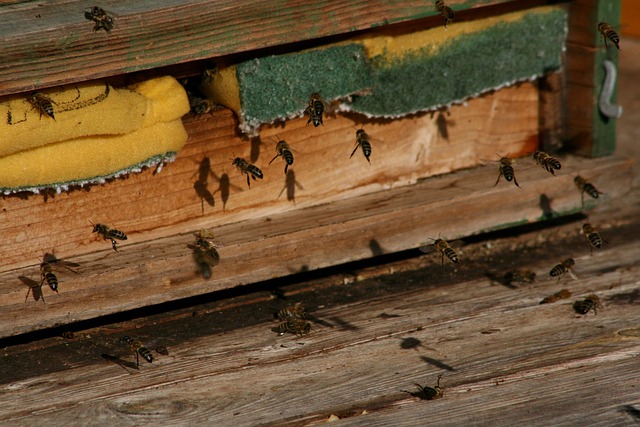
3D printing is no longer just for tech enthusiasts. In recent years, it has naturally found its way into the workshops of DIYers, mechanics, fishermen… and now beekeepers.
Because when you keep several hives, you quickly discover that there are a multitude of small accessories you need on a regular basis: hive entrances, reducers, screens, stands, templates, guides, handles, marking tools, repair parts, and feeding equipment.
Many of these parts are relatively simple to make, provided they have been properly designed specifically for 3D printing.
An affordable solution… but above all, a practical one
The primary advantage of 3D printing is often financial. Making an accessory yourself can sometimes help reduce costs, especially when you need to equip several dozen hives.
But the real point is something else.
Above all, a 3D printer allows you to make exactly the part you need, right when you need it, without having to wait for a delivery or adapt a standard product.
Did an accessory break during a visit? Can’t find a specific part? Have you come up with an improvement for the apiary? A few hours of printing are often all it takes to get the hive back up and running.
Adapt your equipment to your own style of practice
Each beekeeper gradually develops their own practices. Some prefer transhumance, while others practice a more sedentary form of beekeeping.
Some work primarily with Dadant hives, while others use Warré, Voirnot, Langstroth, or TBH hives.
3D printing offers a level of freedom rarely provided by manufacturers: the freedom to adapt the equipment to one’s own needs.
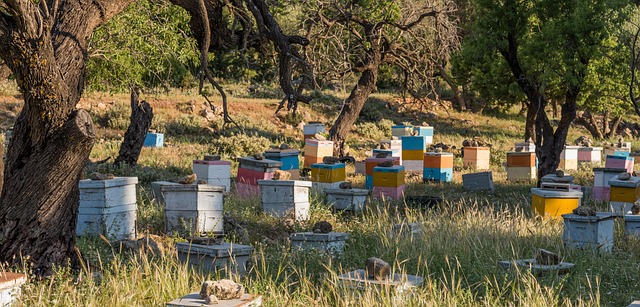
Adjusting a height, widening an opening, adding a handle, installing a locking mechanism, or customizing an accessory is now possible without having to start from scratch.
3D printing also allows for the integration of different beekeeping practices: for example, adapting a Dadant frame to a Langstroth hive rail simply by printing spacer brackets.
Useful visual cues for bees
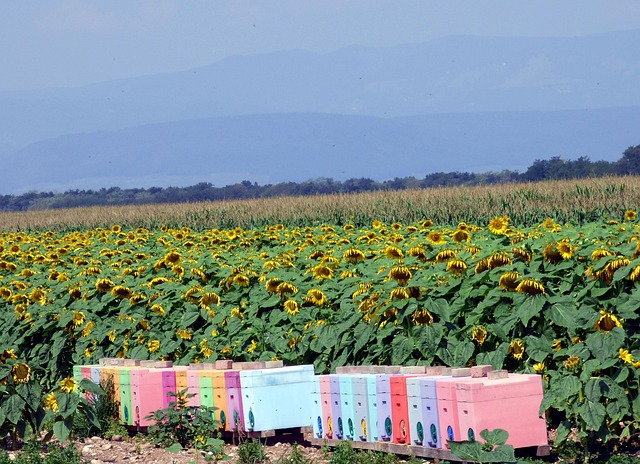
When several hives are placed side by side, bees use various cues to find their colony: the hive’s location, its immediate surroundings, and visual cues such as colors, contrasts, and shapes.
That is why many beekeepers paint the fronts of their hives or add distinctive patterns to minimize disorientation and prevent foragers from straying between colonies.
With this in mind, hive entrances painted in different colors can serve as an additional visual cue, while also allowing beekeepers to quickly identify their colonies. The goal is not to replace the other cues that bees use naturally, but to help them distinguish between colonies visually.
Repair Instead of Replace
Beekeeping is an activity that puts equipment through its paces: inclement weather, sunlight, propolis, repeated handling…
A small broken part doesn't always justify replacing an entire piece of equipment.
3D printing often makes it possible to extend the lifespan of equipment by manufacturing only the necessary part. This approach is fully in line with the principles of repair, cost savings, and waste reduction.
3D printing also fosters innovation
One of the greatest benefits of 3D printing is the ability to create accessories that simply aren't available in stores.
Every beekeeper faces specific challenges related to their apiary, their environment, or their working methods.
3D printing thus makes it possible to devise customized solutions: specialized tools, fastening systems, transport equipment, feeding accessories, and even devices for controlling certain pests.
Some of these innovations remain personal. Others are worth sharing because they address a need widely felt by beekeepers.
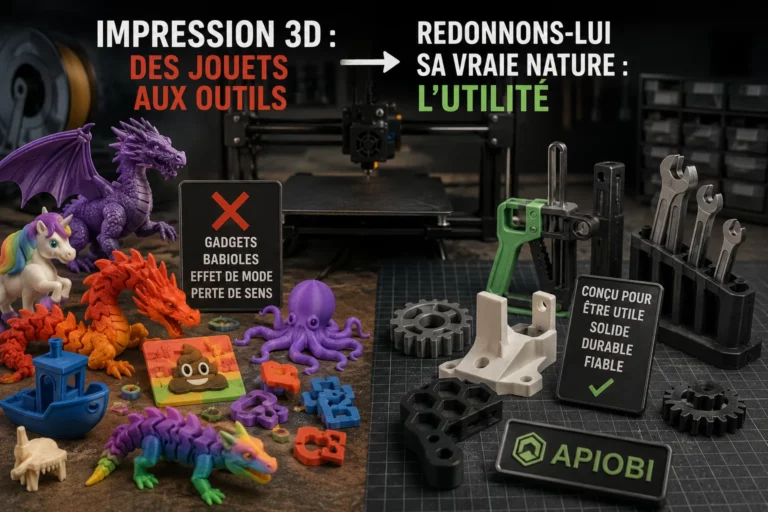
At Apiobi, every model is first and foremost a tool
Designing an accessory for a beehive isn't just a matter of drawing a three-dimensional model.
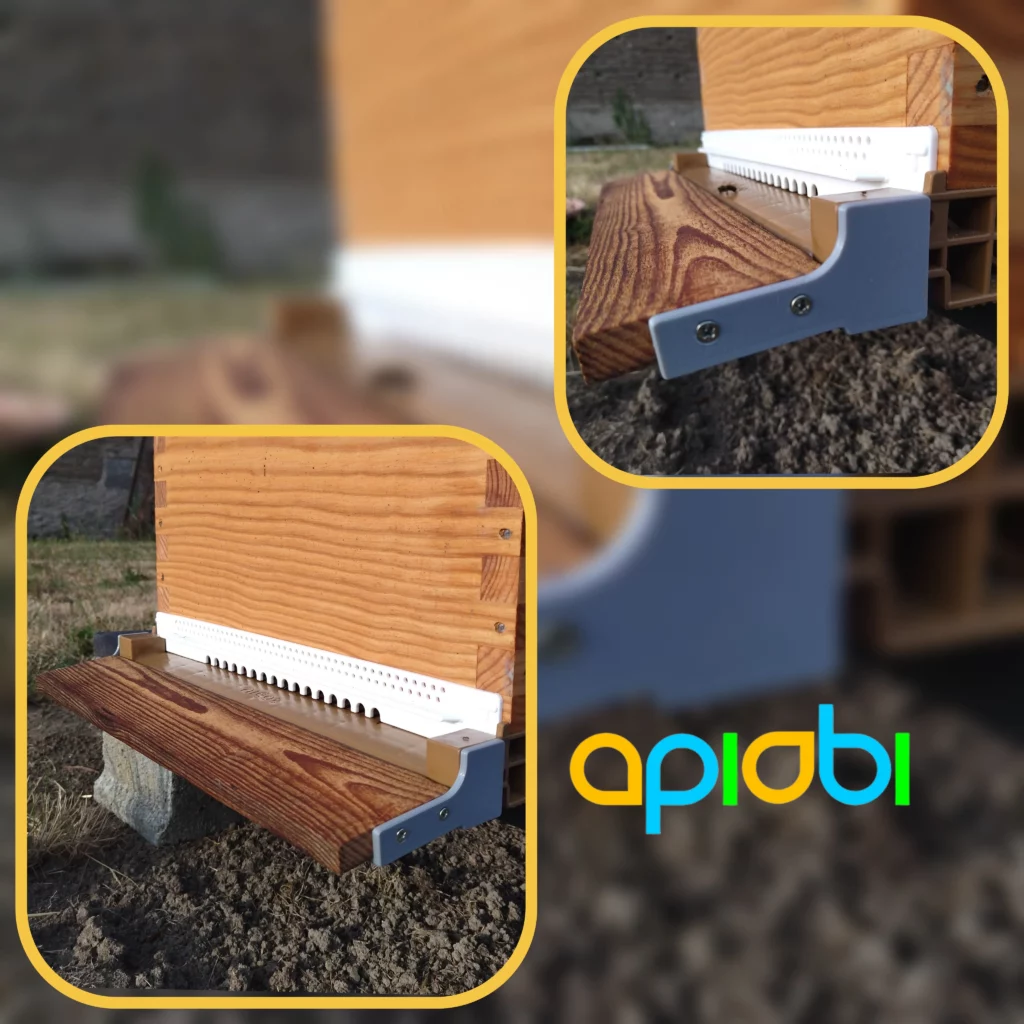
We must take into account beekeepers’ habits, manufacturing constraints, how materials behave outdoors, their resistance to UV rays, temperature fluctuations, and repeated handling—and, above all, how easily they can be printed on consumer-grade 3D printers.
We also know that beekeepers are passionate tinkerers. They invent, repair, and optimize their equipment. 3D printing is another string to their bow—an additional tool for independently creating new solutions using durable, suitable plastic materials.
That’s why every Apiobi model is designed using the same process: identifying a need, designing, prototyping, testing in the apiary, refining again and again, and only then releasing it… or not.
Because in the apiary, just like anywhere else, a good 3D model isn’t judged by how it looks on a screen or by the number of likes it gets, but by its ability to actually be useful, season after season.

 Français
  English
  Español