🚀 Download Platform | 🔒 Secure Payment | ⚙️ 3D Files for Recreational Equipment | 🏆 3D Models Designed for Additive Manufacturing | 2D, 3D, STL, SVG, PDF... | ❤️ Core Values | 💬 Tips, Tricks, and Discussions
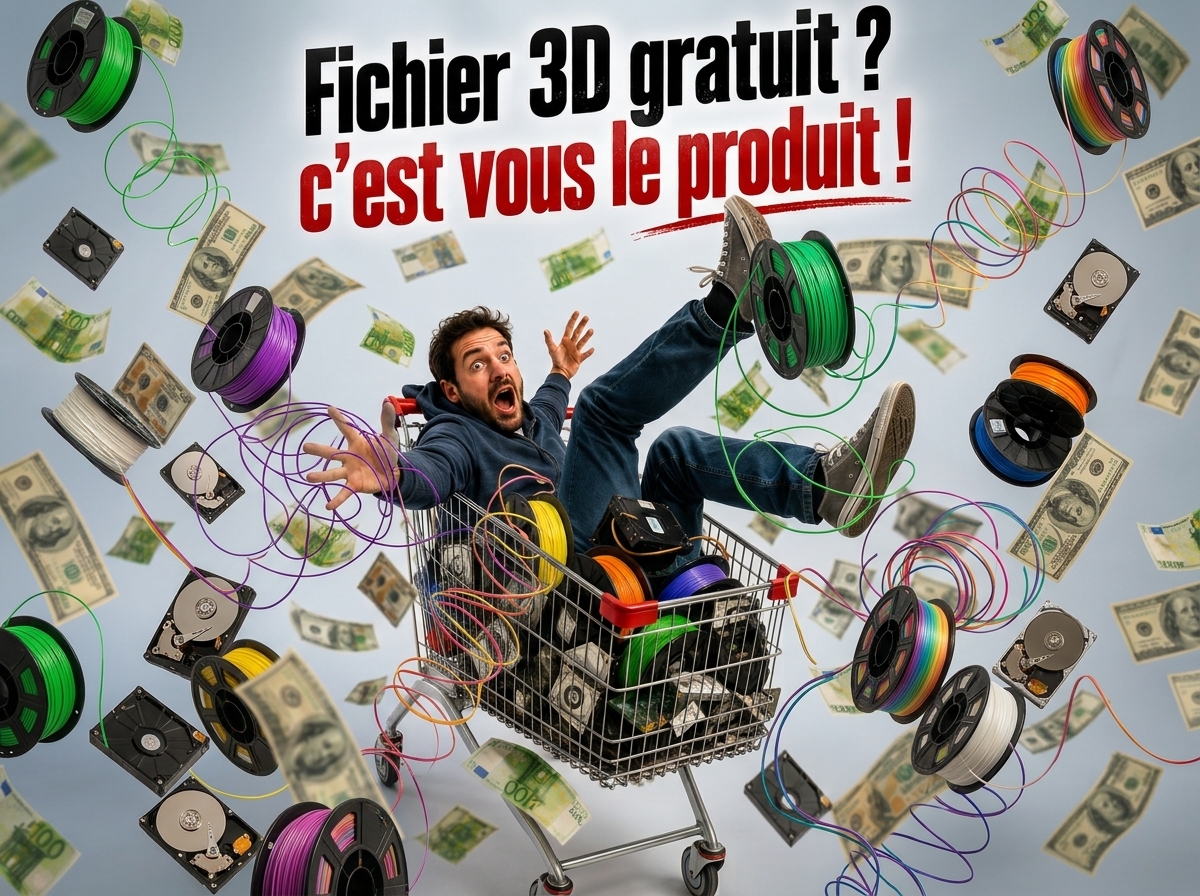
Free 3D files - you're the product!

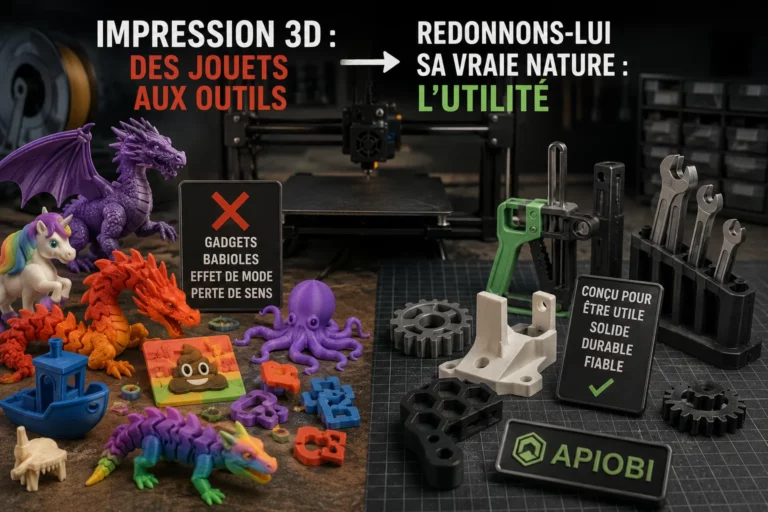
3D printing is not limited to producing simple figurines or decorative gadgets. It becomes functional when a 3D model is designed to be usable, durable and reliable. In this case, its design requires :
- years of practical experience using similar tools in the field of application
- hours of technical and engineering design ;
- tests to verify mechanical strength, fit and tolerances; ;
- in-depth knowledge of materials (PETG, nylon, composites, certified filaments) and their printing behavior.
- hours, sometimes months, of use in real-life conditions
In other words these files are not simply “downloadable” files” digital tools that represent considerable intellectual and technical work, This is comparable to the creation of a commercially-available manufactured product. In short, a 3D model of a functional tool designed for 3D printing can't be free, and if it is, it's a sham!
Free: a marketing ploy
Many sites claim to offer functional templates free of charge. In reality, this “free” offer is nothing more than a business strategy :
- Product placement : The website suggests—or rather, “encourages”—the purchase of filaments, 3D printers, or proprietary accessories to ensure optimal results.
- Ancillary services : Some platforms offer paid services for modifying, optimizing, or “slicing” files, turning the initial free access into a selling point to encourage users to purchase, use a service, or promote a “partner.”.
- Data collection or advertising free downloads attract users, who then become consumers, prospects or datasets...
In any case, “free” is rarely truly “free” in a business model—it’s used as a lure.
There's still one rule in marketing: “When something's free, you're the product! “
A functional model is an asset
Unlike a PLA-printable figurine or toy, a working 3D model represents :
- Expertise : strength calculations, optimized thicknesses, layer orientation, adapted infill.
- A tested product reliability has been validated under real-life conditions.
- Rare know-how Creating a model that can be used immediately is not trivial, and requires design and engineering skills.
So many elements that justify the economic and intellectual value of the file.
Why free distribution can be harmful
Sharing a functional model for free can have negative consequences:
- Disappointing result : Some free models are simply scans of physical objects that are rarely optimized for 3D printing; others are only displayed through a very effective 3D viewer and have never been printed (we’re counting on you, your comments, and your prints!). but the most frustrating ones will still be those that won’t print at all or print poorly on your machine. Who cares—they’re free!
- Devaluation of the designer's work For example, offering an ‘elaborate’ file free of charge encourages makers to build without paying, to underestimate the complexity and investment required, and to give up or even take offense at paying a few euros for a functional model.
- Swallowing the price of a machine Would the promise of a catalog of free files help sell a 3D printer at over €1,000?
- Commercial abuse the platforms exploit this free model to generate a flow of indirect purchases, to the detriment of transparency and ethics.
- Waste : Print addicts, compulsive collectors of digital data, those who say, ”I’ll download it just in case!”—as well as those who think, “Well, since it’s free, I’ll take it”—share the top spots among those who print out of addiction rather than out of a specific need. They consume as much filament as they do storage capacity in gigabytes and cubic meters. And yes, free downloads drive sales of kilometers of filament, secondary data storage (HDD, SSD, SD, etc.), storage solutions and display stands for prints, electricity… I’ll let you fill in the rest—you have two hours!
Conclusion: free is not compatible with responsibility and quality
A functional 3D model is not an ordinary product. You pay for what you get. It combines business and user expertise, engineering work, testing, know-how, and—always—an investment in equipment and materials for validation that is never fully recouped.
The so-called "free" service advertised on some websites is often a marketing screen, which masks perfectly legal commercial objectives: the sale of filaments, printers, accessories, or services. If 3D printing guides specify printing temperatures, unusual slicer settings, promises of multicolor printing, an insistent promotion of a technical material, unexpected pop-ups, or banner ads, these are all indicators that suggest the free file is likely a decoy.
Because financial support from users—such as PayPal donations or “Buy Me a Coffee”—is extremely rare, the developer “pays” himself in “likes” and fleeting fame. For the user, “free” is a relative term, since it’s limited to the act of downloading. Whether you pay a designer €3 for their work or not, you still have to print the model and wait to see the final result. What a bargain! The “free” aspect evaporates instantly in the face of disappointment and waste; you only need to read the scathing comments from users disgusted by a print job that failed or went wrong after an 8-hour wait to be convinced. Haters hate free stuff, too.
In reality, Paying for a functional model that includes detailed specifications and actual photos ensures its reliability, supports the designer's work, and allows you to benefit from a proven product.. That’s how a 3D printer goes from being a passing fad to becoming a self-sufficient and responsible fabrication workshop.
When something is free, you're the product!

 Français
 English
 Español